Sir Roger Moore passed away today. I shall raise an alcohol free martini in his honor and tearfully watch my favorite Moore as Bond film :

What’s your favorite Roger Moore movie ?
Home for Meg Davis~Songwriter~Singer~Artist
Sir Roger Moore passed away today. I shall raise an alcohol free martini in his honor and tearfully watch my favorite Moore as Bond film :
What’s your favorite Roger Moore movie ?
It’s always something. Just as I got creativity neurons and brain areas talking to each other..WHAM..a really bad concussion in December of 2015 brought everything to a halt.
Concussion was caused by a car accident, other than my neck the rest of me was fine. I just thought I’d report in here since my last one was way back in 2014. Honestly, you get so used to hearing the word “concussion” during football season that a lot of people just let it slide. Until you’ve had a brain injury like this you really can’t appreciate how bad it can be.
It took me the better part of 2016 to get back to feeling like my old self but I haven’t had any opening in the dark clouds that completely swamp my brain’s creative centers since then.
I’ve been really disappointed by this because I knew the final Pirates of The Caribbean was being released this year and I have a whole album of water and seafaring songs written out as an idea… My brain just couldn’t let me pull it all together for you.
Ah well, as I keep saying, onward and upward !
Hope Springs Eternal
I’m trying to watch NASA TV while I deal with a bad case of double vision and vertigo… It ain’t working.

No matter how you celebrate or enjoy today you can revel in the fact that it’s a great time for bunnies, chicks, eggs and art !
So, sit back with a bowl of foil covered, dark chocolate eggs and enjoy some of this great art from around the web.







And why did the baby chicks cross the road ? To catch a ride, it seems.
Now arriving by street car :

And motor car..

And zeppelin, of course !

For your delight, I’m presenting old Easter Cards for you this holiday weekend. These cards are a delight. Here’s a group showing people and their critters.
Enjoy !




This is a day for renewal,
beginning a new project
and starting afresh.
Enjoy this day.

Written by Ana Sandoiu
Published 3/8/17
People with celiac disease or who are gluten intolerant may benefit from a low-gluten diet. A considerable number of people who do not have these diseases still adopt a gluten-free diet in the hope that it benefits their health. New research, however, suggests that a low-gluten diet may even have some adverse health effects, by raising the risk of diabetes.
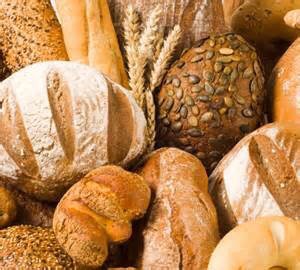
New research suggests that a higher intake of gluten for people who do not have gluten intolerance may lower the risk of type two diabetes.
Gluten is a protein mainly found in wheat, barley, and rye, as well as baked goods and other foods that contain these cereals. People with celiac disease – an autoimmune disorder affecting at least 3 million people in the United States – avoid gluten because their immune system responds to it by attacking the small intestine.
However, more and more people are adopting a gluten-free diet, despite its health benefits being unclear.
In fact, some nutritionists advise against avoiding gluten. Instead, they recommend a well-balanced diet that includes fruit and vegetables, as well as whole-grain wheat and other foods containing gluten.
New research – presented at the American Heart Association’s Epidemiology and Prevention/Lifestyle 2017 Scientific Sessions – suggests that a low-gluten diet may have adverse health effects by raising the risk of type 2 diabetes.
Studying the link between gluten consumption and type 2 diabetes
Geng Zong, Ph.D. – one of the study’s authors and a research fellow in the Department of Nutrition at Harvard University’s T.H. Chan School of Public Health in Boston, MA – explains the motivation behind the study:
“We wanted to determine if gluten consumption will affect health in people with no apparent medical reasons to avoid gluten. Gluten-free foods often have less dietary fiber and other micronutrients, making them less nutritious and they also tend to cost more.”
The team approximated the gluten consumption for 199,794 individuals enrolled in three long-term studies: the Nurses’ Health Study (NHS) I and II, and the Health Professionals Follow-up Study (HPFS).
As part of these studies, participants answered food frequency questionnaires every 2 to 4 years. Overall, participants consumed under 12 grams of gluten per day. The average daily consumption was 5.8 grams for the NHS I study, 6.8 grams for NHS II, and 7.1 grams for HPFS.
Researchers followed the participants for approximately 30 years, between 1984-1990 and 2010-2013.
People who consume more gluten 13 percent less likely to have diabetes
Throughout the 30-year follow-up period, 15,947 cases of type 2 diabetes were identified.
The study found that participants who had the highest gluten intake – up to 12 grams per day – had a lower risk of developing type 2 diabetes over the 30-year follow-up period. Those who ate less gluten also had a lower cereal fiber intake. Fiber is known to protect against type 2 diabetes.
After adjusting for the protective effect of fiber, participants in the upper 20 percent on the gluten consumption scale were 13 percent less likely to develop type 2 diabetes, compared with those on the opposite end of the scale – namely, those whose gluten intake was below 4 grams per day.
“People without celiac disease may reconsider limiting their gluten intake for chronic disease prevention, especially for diabetes,” says co-author Zong.
Limitations of the study include its observational nature, which means that it cannot establish causality, and the fact that more research is needed to confirm the findings. Additionally, the researchers did not include data from those who have eliminated gluten from their diet completely.
 Meg Davis Music and Arts