Useless salad-tosser robot joyfully harasses your lettuce – CNET
BLOG !
So you think Russia trying to influence the US voting public is a new thing ? Better read your history..
Tuesday marks the 100th anniversary of a remarkable success for British intelligence: but one that involved spying on the United States and then conspiring with its senior officials to manipulate public opinion in America.
Why was the Zimmerman Telegram so important?
How cold is it in Germany ?…
 From BBC Europe
Frozen Mister Fox
A hunter in Germany has displayed a fox which froze inside a block of ice to warn people of the dangers of the icy Danube river.
The fox is thought to have fallen into the river and drowned before quickly freezing.
Franz Stehle put the animal on display outside his family’s hotel in Fridingen, on the upper reaches of the Danube.
Mr Stehle said he had seen other frozen animals, including deer and wild boar.
Studio Ghibli and Ronja, The Robber’s Daughter
Oh, the joy ! Amazon Prime members will be able to watch a new Studio Ghibli release.
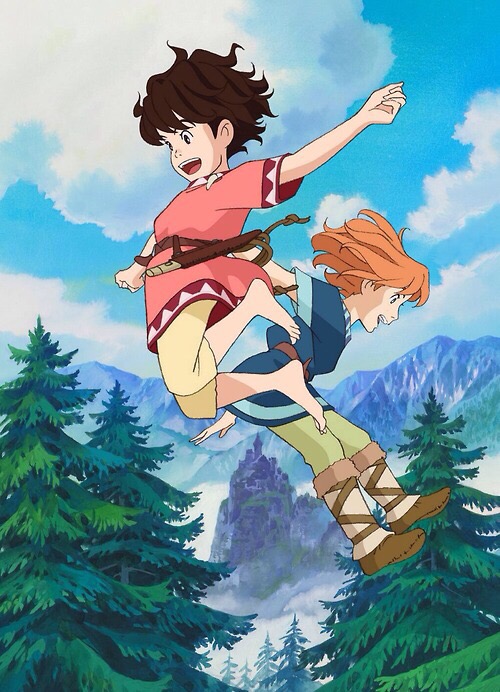
Amazon Prime memberships are in for a treat — the acclaimed Japanese studio has made a television series, and it’s coming to the service on January 27.

The 26-episode show, “Ronja, The Robber’s Daughter” is based on a book by “Pippi Longstocking” author Astrid Lindgren, and the series is narrated by “X-Files” star Gillian Anderson. The series ran in Japan in 2014.
“The daughter of a professional robber, Ronja realizes the complicated nature of her father’s profession when she befriends Birk, the child of a rival tribe,” the show’s description reads. “She struggles to balance this friendship with her family relationship but comes to understand how differences can be overcome with the help of love and understanding.”

Meanwhile, In Canada…
BBC NEWS FROM ELSEWHERE
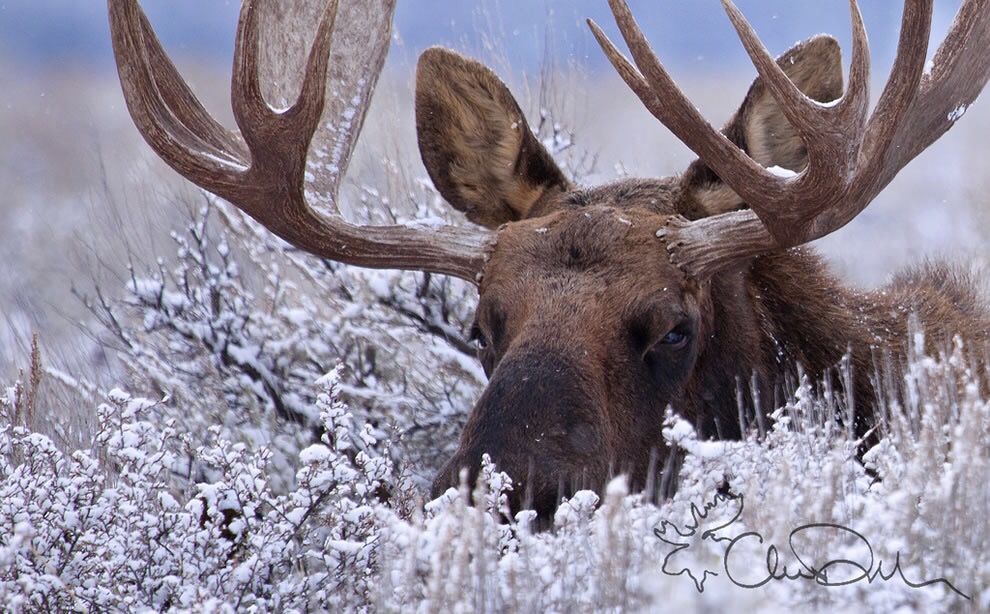
If you spot a moose attempting to clean your car.. Don’t try to stop it.
Officials in western Canada are warning motorists not to interact with moose if they find the animals licking salt off their cars.
An alert issued by the province of Alberta’s government says that moose are approaching vehicles in car parks near two trails in Peter Lougheed Provincial Park, and warns people not to try to push the animals away while on foot.
It advises that the recommended “moose viewing distance” is 30m (100ft), and any car-licking creatures should be deterred by either sounding a horn or using a remote door alarm instead. As CBC news points out, adult moose can weigh more than 1,000lb (453kg), so shoving one is unlikely to be effective. The animals can become aggressive and charge people or vehicles if they feel threatened.

Dr Doug Whiteside from Calgary Zoo tells Global News that moose and other wildlife ordinarily get all the salt they need in their diets. “If there is no natural source of salt available they will find an alternate source, like the salt from the roads on vehicles,” he says.
The Alberta warning is in place until further notice, and officials are asking people to report any “aggressive moose encounters” immediately.
Use #NewsfromElsewhere to stay up-to-date with our reports via Twitter.
In Case You Missed It : Hear the Star Wars ‘Imperial March’ played on an arc lighter – CNET

Thank You, Mr. Wong
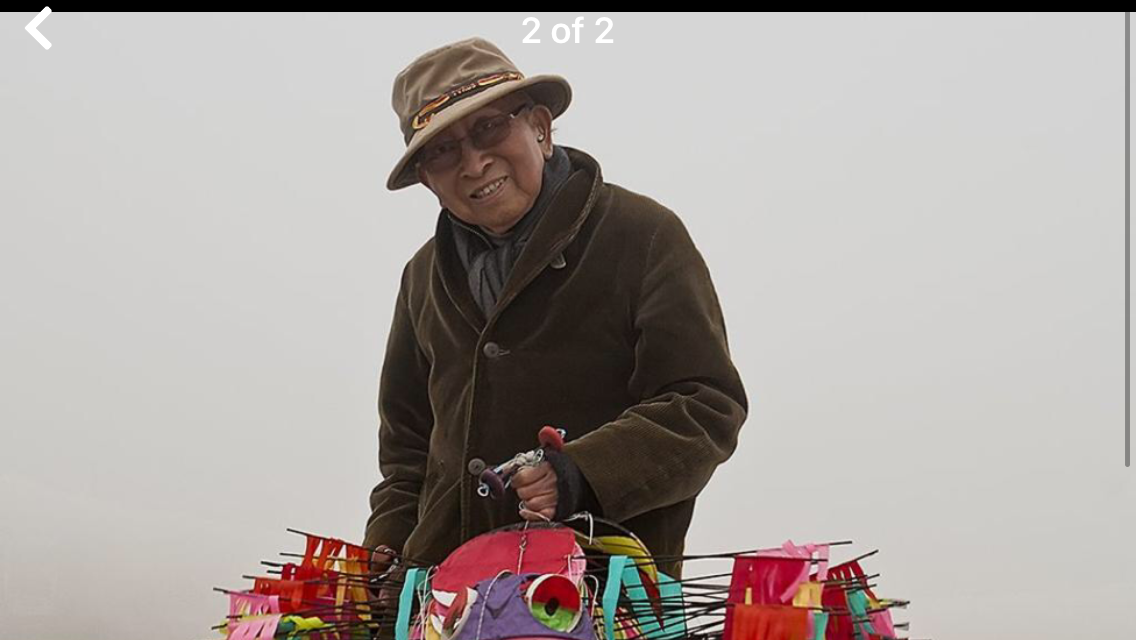
Tyrus Wong, the artist whose works inspired the Disney film Bambi, has died aged 106.A Chinese immigrant, Mr Wong’s vibrant paintings captured Walt Disney’s eye and became the basis of the film’s distinct style.
In a statement, the Walt Disney Family Museum said “his influence on the artistic composition of the animated feature Bambi cannot be overstated.”
He died at home surrounded by his family.
Mr Wong emigrated to the United States from China as a child, with his father – leaving behind his mother and a sister he would never see again.
After studying as an artist, he began working with Disney in 1938 as an “inbetweener”, drawing hundreds of pictures between poses to create the illusion of motion.
Looked and Felt Like A Forest
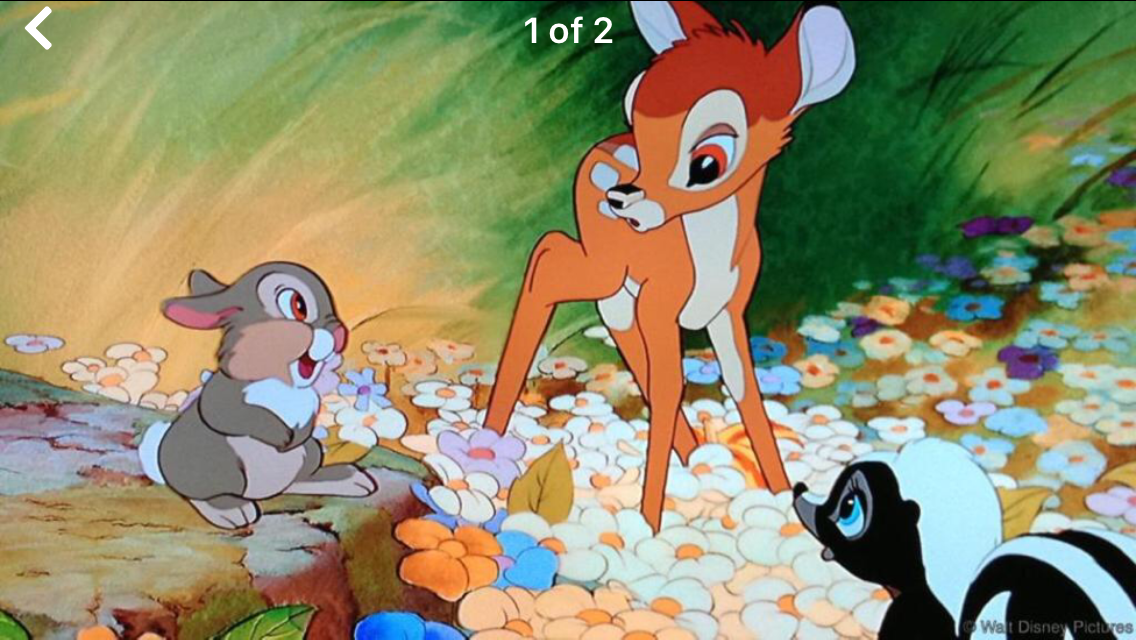
When the film studio began pre-production on Bambi, “he went home and painted several pictures of a deer in a forest”, the Disney museum said.
“Walt Disney saw that Tyrus was able to produce exquisite artwork that did not necessarily look like the forest – but rather, felt like the forest. Walt’s vision for Bambi and use of Tyrus’ work still influences films today,” it said.
Tyrus Wong only worked at Disney for three years, moving to Warner Brothers as a concept artist, designing greeting cards for Hallmark on the side.
After retiring, he turned to creating hundreds of elaborate bamboo kites, received many awards in recognition of his work, and became the subject of a documentary about his life.
Writing about his death, the documentary’s director said “with his passing, we have lost a brilliant artist, motion picture and animation legend, Chinese American pioneer, and hero.
“Tyrus always faced adversity with dignity, courage, and art… he awed us with his talent, charmed us with his boyish humour, and moved us with his humility, generosity, resilience, and big heart.”
1/1/17 Article by BBC America
It’s Hogmanay !

Article by By Ferne Arfin, United Kingdom Travel Expert
Hogmanay is Scotland’s New Year’s celebration. But did you know that this three to five day blast includes a variety of ancient Hogmanay traditions?
As Christmas festivities wind down all over the United Kingdom, the really spectacular parties in Scotland are just getting underway. Among the celebrations, street festivals, entertainment and wild – occasionally terrifying – fire festivals and the enormous public New Year’s events (the biggest and most famous in Edinburgh) are holiday traditions that go back for hundreds of years, maybe even more.

Five Hogmanay Traditions
Besides concerts, street parties, fireworks and more earthbound fire spectaculars, as well as consumption of one of Scotland’s most famous products, Scotch whisky, a number of very ancient traditions associated with Hogmanay in Scotland can still be found in smaller communities and private celebrations.
First Footing
After the stroke of midnight, neighbors visit each other, bearing traditional symbolic gifts such as shortbread or black bun, a kind of fruit cake. The visitor, in turn, is offered a small whisky. If you had a lot of friends, you’d be offered a great deal of whisky.
The first person to enter a house in the New Year, the first foot, could bring luck for the New Year. The luckiest was a tall, dark and handsome man. The unluckiest a red head and the unluckiest of all a red-headed woman.
Redding the House
Like the annual spring cleaning in some communities, or the ritual cleaning of the kitchen for Passover, families traditionally did a major cleanup to ready the house for the New Year. Sweeping out the fireplace was very important and there was a skill in reading the ashes, the way some people read tea leafs.
Bonfires and Fire Festivals
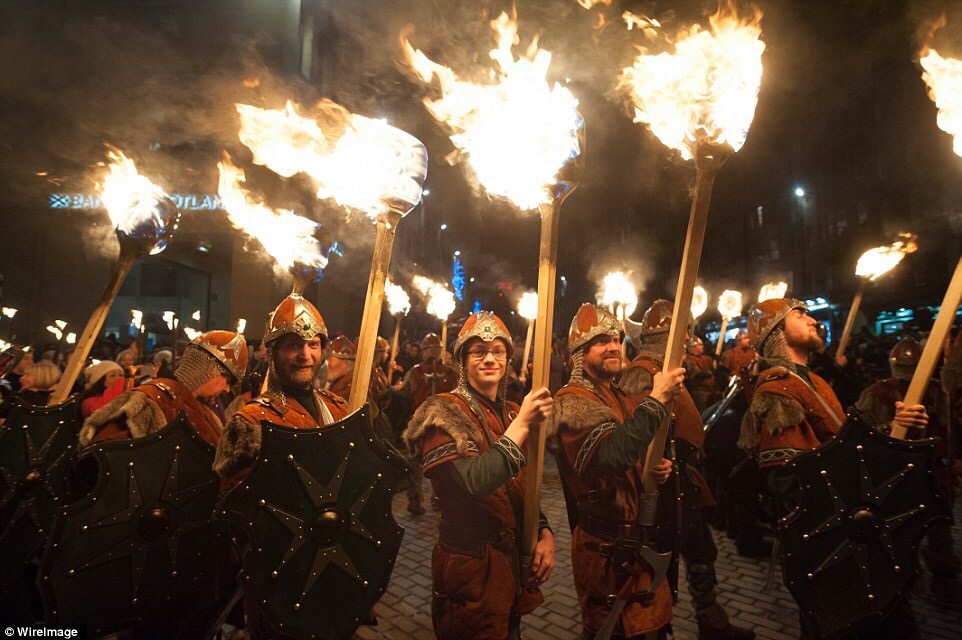
Scotland’s fire festivals at Hogmany and later in January may have pagan or Viking origins. The use of fire to purify and drive away evil spirits is an ancient idea. Fire is at the center of Hogmanay celebrations in Stonehaven, Comrie and Biggar and has recently become an element in Edinburgh’s Hogmanay celebration.
The Singing of Auld Lang Syne
All over the world, people sing Robert Burns’ version of this traditional Scottish air. How it became the New Year’s song is something of a mystery. At Edinburgh’s Hogmanay, people join hands for what is reputed to be the world’s biggest Auld Lang Syne.
The Saining of the House
This is a very old rural tradition that involved blessing the house and livestock with holy water from a local stream. Although it had nearly died out, in recent years it has experienced a revival. After the blessing with water, the woman of the house was supposed to go from room to room with a smouldering juniper branch, filling the house with purifying smoke. Of course, this being a Scottish celebration, traditional mayhem was sure to follow. Once everyone in the household was coughing and choking from the smoke, the windows would be thrown open and reviving drams or two of whisky would be passed around.
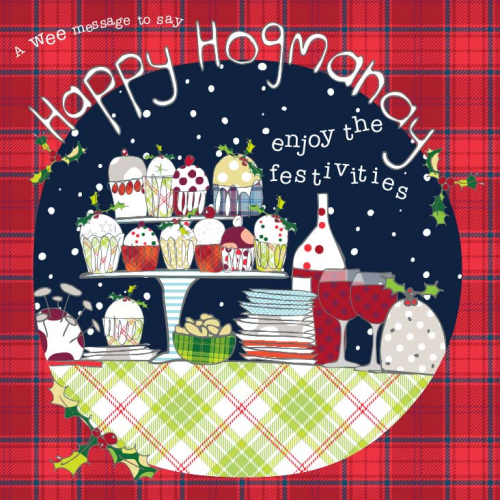
Why is Hogmanay so important to the Scots
Although some of these traditions are are ancient, Hogmanay celebrations were elevated in importance after the banning of Christmas in the 16th and 17th centuries. Under Oliver Cromwell, Parliament banned Christmas celebrations in 1647. The ban was lifted after Cromwell’s downfall in 1660. But in Scotland, the stricter Scottish Presbyterian Church had been discouraging Christmas celebrations – as having no basis in the Bible, from as early as 1583. After the Cromwellian ban was lifted elsewhere, Christmas festivities continued to be discouraged in Scotland. In fact, Christmas remained a normal working day in Scotland until 1958 and Boxing Day did not become a National Holiday until much later.
But the impulse to party, and to put the products of Scotland’s famous distilleries to good use, could not be repressed. In effect, Hogmanay became Scotland’s main outlet for the mid-winter impulse to chase away the darkness with light, warmth and festivities.

Ooops..
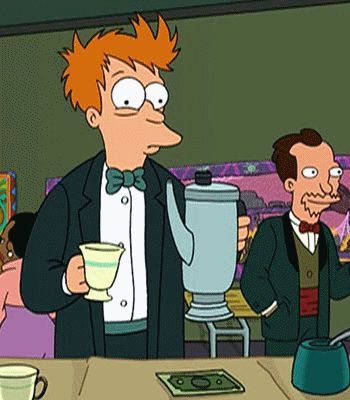 Note To Self : Always read the spice lable before dusting your coffee … Cumin doesn’t go well on a Cappuccino. 🙄
 Meg Davis Music and Arts